
Why Physical Therapy Is Key for Post-Surgical Shoulder Pain Relief
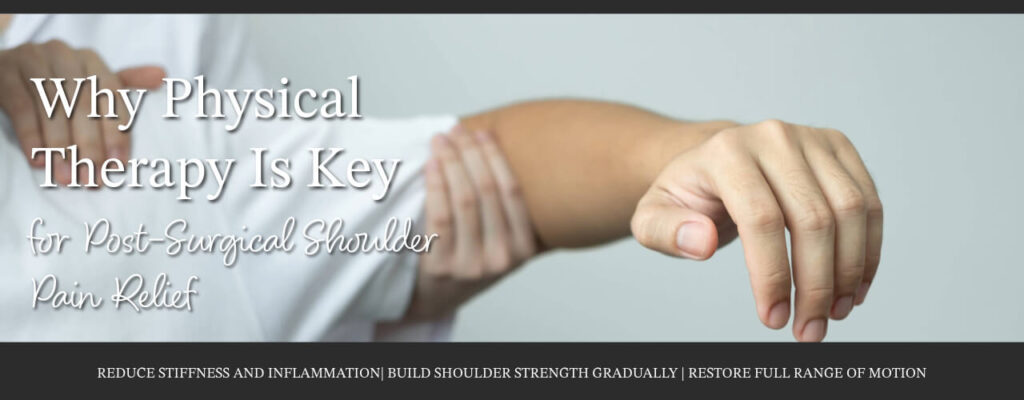
Recovering from shoulder surgery can be a long and difficult process, but you don’t have to go through it alone. Many patients experience stiffness, weakness, and discomfort after surgery, which is why post-surgical shoulder pain relief often depends on a structured physical therapy plan.
At Optimum Physio Therapies, we regularly work with patients who have undergone shoulder surgery. Our comprehensive rehab plans focus on reducing pain and improving long-term outcomes. We start right after the procedure and guide you through specialized exercises to enhance mobility, strength, and function–that way, you can get back to the activities that matter most.
Why Physical Therapy Matters After Shoulder Surgery
Physical therapy is critical in restoring function after surgery on the rotator cuff, labrum, shoulder joint, or tendons. In fact, patients who follow a structured physical therapy program often recover more efficiently and regain better shoulder function than those who skip rehab.
Why? Because without proper rehab, scar tissue can limit movement and muscles can weaken, making it harder to return to your daily routine. Here are just a few of the benefits:
- Reduces inflammation and stiffness through gentle movement and hands-on techniques
- Provides pain relief through guided exercises and modalities like ice, heat, or electrical stimulation
- Improves range of motion so you can lift, reach, and rotate your arm comfortably
- Builds strength gradually to protect the joint and support your return to activity
- Retrains posture and movement patterns to prevent re-injury
What to Expect: Phases of Physical Therapy After Shoulder Surgery
A successful program for post-surgical shoulder pain relief moves through distinct stages. Each phase builds on the last, helping you restore function at a safe and effective pace.
We structure our plans to ensure you progress safely without rushing or delaying recovery.
Phase 1: Protection and Pain Management
- Begins immediately or within the first few days after surgery
- Focuses on reducing swelling and protecting the surgical site
- Includes gentle range-of-motion exercises (often passive at first)
- May use ice, compression, or electrical stimulation for pain control
Phase 2: Early Mobility and Range of Motion
- Typically starts 2–4 weeks post-op, depending on your surgery
- Introduces active-assisted movements like pendulum swings and supported arm raises
- Helps reduce joint stiffness and prevent frozen shoulder
- Your therapist monitors your progress closely to avoid overloading the joint
Phase 3: Strengthening and Stability
- Begins once you’ve regained a safe range of motion (often around 6–8 weeks)
- Incorporates resistance exercises using bands, weights, or bodyweight
- Strengthens the rotator cuff, shoulder blade muscles, and upper back
- Promotes better control and endurance for daily tasks
Phase 4: Functional Training and Return to Activity
- Focuses on movements specific to your lifestyle or sport
- Includes lifting, reaching, or throwing tasks depending on your goals
- Your therapist helps correct compensations and improve coordination
- The program ends when you meet strength, motion, and functional milestones
Let Us Help You Find Pain Relief After Shoulder Surgery
Shoulder surgery is only the first step. How you rehab afterward plays a significant role in your long-term comfort, mobility, and performance.
The Optimum Physio Therapies team has extensive experience in post-surgical shoulder pain relief and will guide you through every phase of recovery. Whether you’ve had a rotator cuff repair, labral surgery, or total shoulder replacement, we’ll help you regain strength and restore motion correctly.
Ready to take the next step toward lasting relief? Schedule your initial appointment at our San Antonio, TX clinic today!