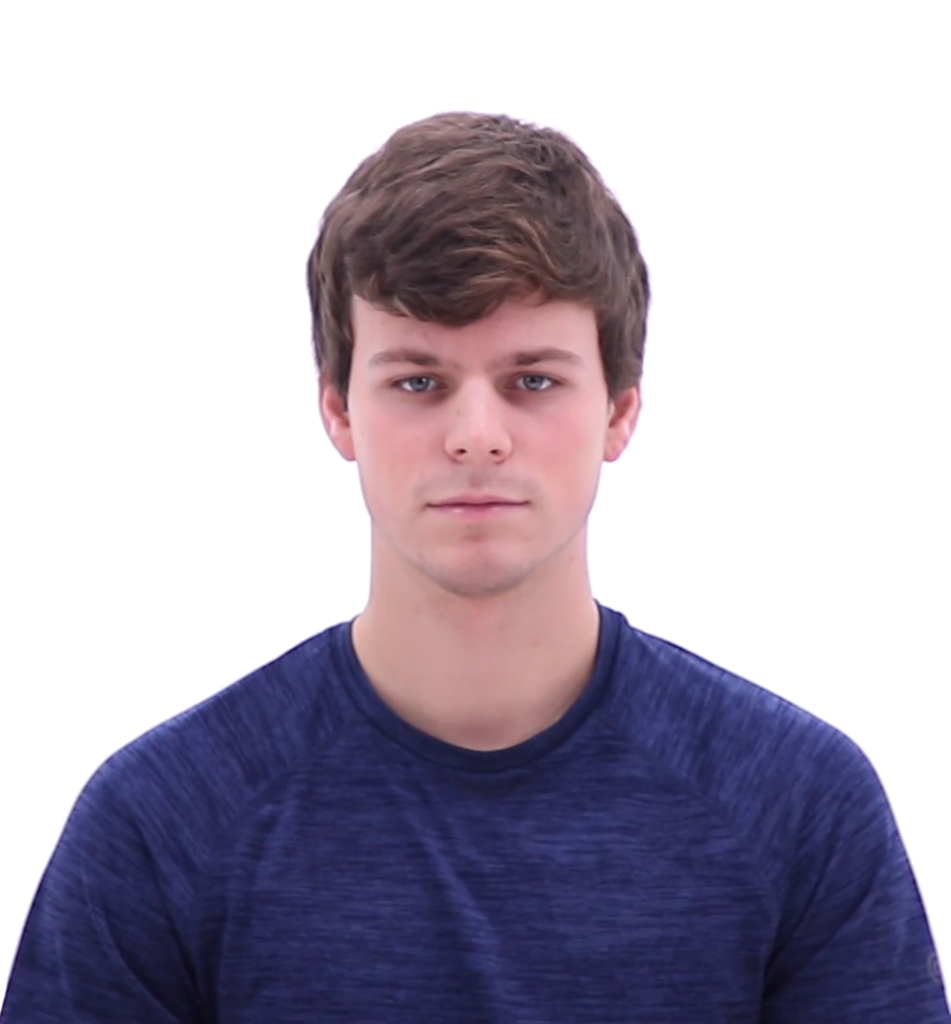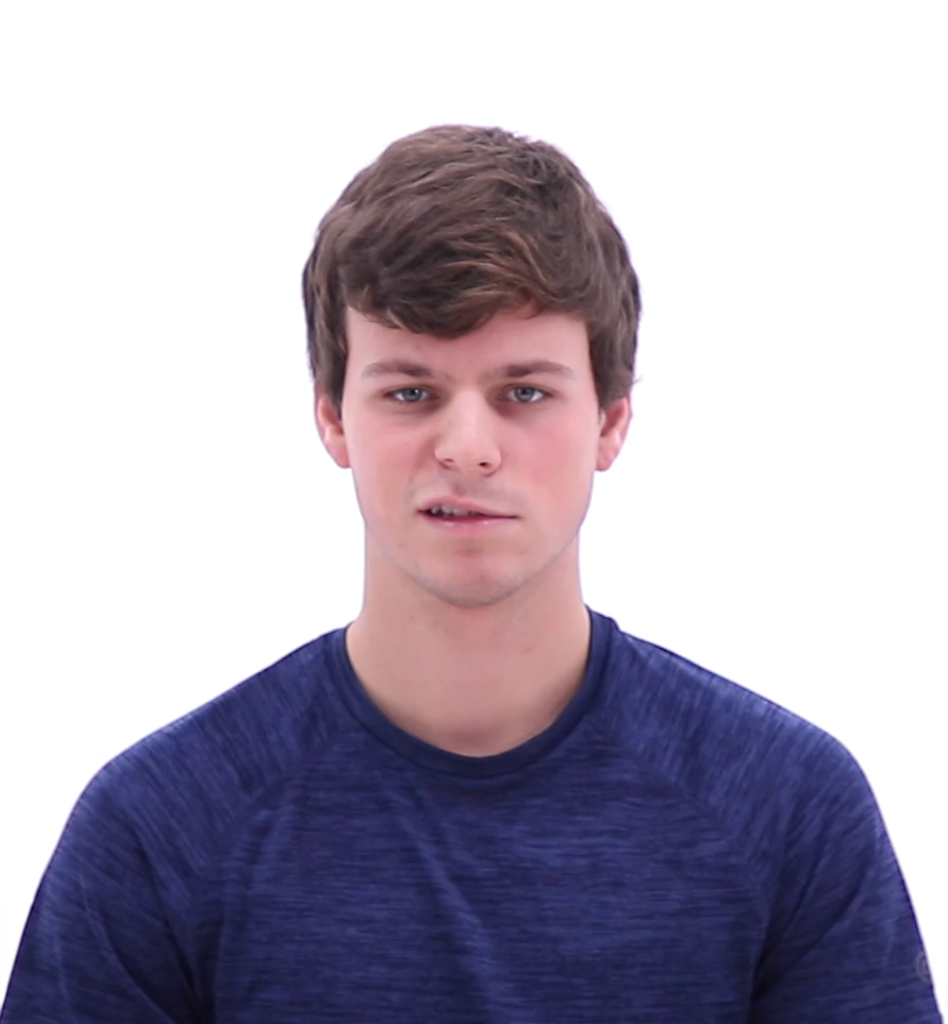

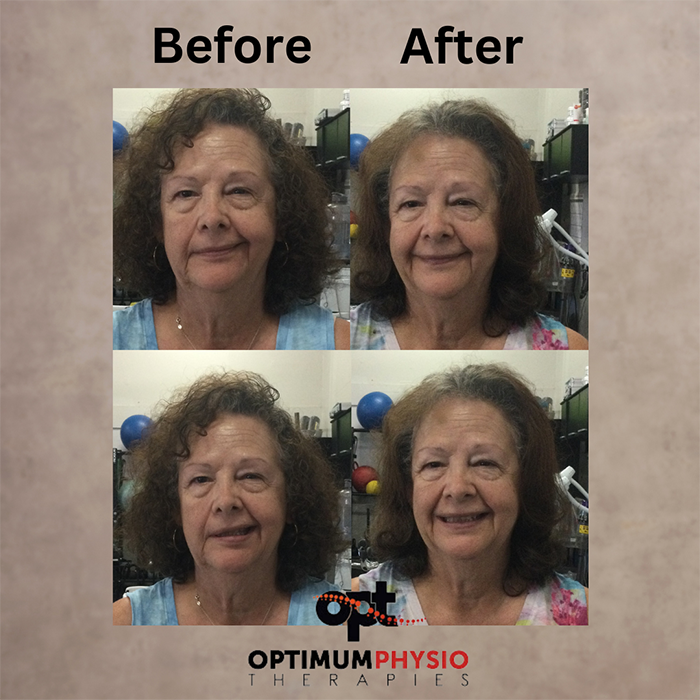
Lisa was pregnant with her second child when, seemingly out of nowhere, she lost control of the right side of her face. Her right eyelid drooped so badly she struggled to close her eyes, and eating was nearly impossible. She was at a loss for what to do.
Fortunately, she learned pretty quickly that she had developed Bell’s palsy, which causes sudden weakness and paralysis in the muscles on one side of the face. She also learned that Bell’s palsy isn’t permanent–although a full recovery can take 3-6 months for most people.
Although Bell’s palsy typically goes away on its own, Lisa found its symptoms extremely difficult to live with, especially on top of her pregnancy. She was surprised to learn that physical therapy offers several methods for treating Bell’s palsy–but was grateful for the discovery, as her physical therapy sessions made it much easier for her to manage her condition.
At Optimum Physio Therapies, our physical therapists are up to date on the most advanced methods for treating Bell’s palsy–and well-equipped to help patients like Lisa. Our goal is to help you achieve a more comfortable quality of life as you recover, and we’ll do everything we can to ensure your experience with us is positive and successful!
Contact Optimum Physio Therapies today to learn more about the benefits of physical therapy for Bell’s palsy and schedule an appointment with one of our skilled and attentive therapists!
What is Bell’s Palsy? Understanding the Symptoms and Causes
Bell’s palsy is a temporary condition characterized by sudden, severe weakness or partial to complete paralysis of the muscles on one side of the face. The condition can sometimes also leave patients with a loss of sensation on that side.
Here’s a quick run-down of some of the more common symptoms of Bell’s palsy:
• A drooping mouth or eyelid on one side of the face
• Twitching or contraction of the muscles on one side of the face
• Increased sensitivity to sound in one ear
• Pain in or around the affected ear
• Difficulty eating, drinking, or speaking due to weakness in the facial muscles
• Inability to make facial expressions, such as smiling or frowning
• Eye irritation on the affected side of the face, dry eyes, and/or inability to close your eye (or eyes).
One symptom Bell’s palsy rarely causes is physical pain in the affected facial muscles. However, many people with the condition struggle with its psychological ramifications. Facial paralysis will change your appearance and make day-to-day tasks, such as smiling or chewing, much more difficult.
The exact cause of Bell’s palsy is difficult to pinpoint. We do know that, physiologically speaking, it’s caused by inflammation of the facial nerve, which controls the muscles of the face. What we don’t know is the source of that inflammation. Some suggested theories include viral infections, stress, and genetics.
The Role of Physical Therapy in Recovering from Bell’s Palsy
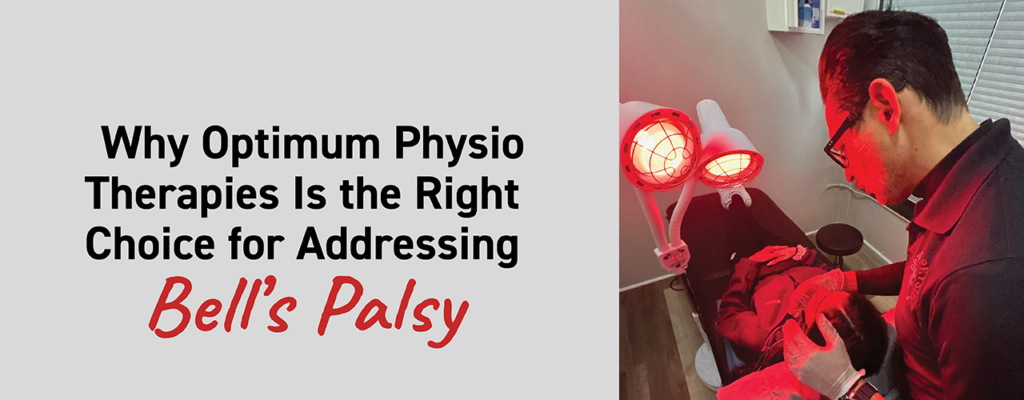
Our physical therapists will help you regain control over your facial muscles, showing you how to manage daily functions with paralysis and improve your overall quality of life. We’ll develop a customized treatment plan using a blend of different physical therapy techniques, including the following:
• Modalities such as laser therapy or electrical stimulation can help stimulate facial muscles and promote recovery.
• Initiation exercises will help you initiate movement in your facial muscles–effectively “triggering” the muscles to get them moving.
• Facilitation exercises take the initiation exercise a step further. Once you can initiate movement, these exercises help you increase muscle activity to build strength and restore functionality.
• Patient education is also an essential piece of the puzzle. We’ll give you the tools and strategies to have a comfortable recovery, from information about protecting your affected eye to at-home exercises that complement your in-clinic session.

Contact Our Clinic For An Appointment Today!
If you’ve recently developed Bell’s palsy, the therapists at Optimum Physio Therapies are here to help! We’ll show you how to improve your daily function and begin the journey toward recovery.
Our Patients Get Great Results
“Within two weeks of therapy we noticed a huge difference.”
“I took my mom due to her Bell’s palsy and we are both very pleased with the outcome! Within two weeks of therapy we noticed a huge difference. The staff is all amazing! I am very happy to have found Optimum! Thank you Optimum for helping my mom recover faster!”
— Vicky C.
“I found Optimum Physio in my search for treatment for Bell’s palsy and I’m so thankful that I did! They made my journey with Bell’s a lot less frightening. The staff was so friendly and super helpful! With their help and the super effective treatment specific to Bell’s palsy, I was able to have a speedy recovery. I highly recommend them!”
—Briana P.
We Want To Hear Your PT Success Story!
Golf Performance Clinic
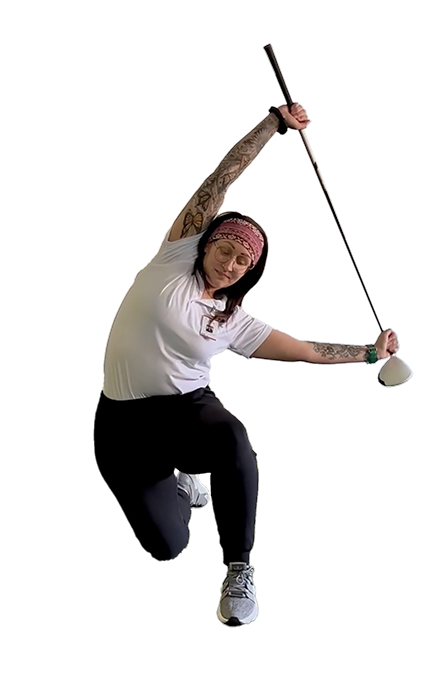
Eight out of 10 golfers say that lower back pain and lack of mobility are the biggest factors that limit their time on the course and affect the ability to drive with confidence out of the tee box. Eliminating these two barriers will not only drop your score but set a foundation for enjoyable golf for years to come. Optimum Physio Therapies San Antonio has partnered with TPI (Titleist Performance Institute) to better handle these issues so golfers may drive further, play longer, and have confidence in their stroke.
If you would like to know more about how our Optimum Physio Therapies Golf Performance Clinic can help you drive further and play longer, contact us today!


Did you know…
If you’ve already met your deductible this year or have funds left in your HSA account, you may still have visits remaining on your insurance plan.
Get the Care You’ve Already Paid For! Contact us today!
Exercise of the Month
Unilateral Lip Elevation
Start by sitting upright in a chair with your mouth closed. Elevate the upper portion of your lip on one side of your mouth. Make sure not to move your lower lip or squint if possible. Repeat: 3 sets, 10 reps.